
Can cats eat fruits and vegetables? Some can, but cats don’t need them to stay healthy.
Cats are obligate carnivores, meaning their bodies are designed to get the nutrients they need primarily from animal-based foods. A complete and balanced cat food should provide the nutrition your cat needs every day, so fruits and vegetables are not an essential part of a cat’s diet.
That doesn’t mean your cat can never have a bite of your apple or a little piece of cucumber. Some cats enjoy small amounts of certain fruits and vegetables as an occasional treat. The key is knowing which foods are safe, how much to offer, and which foods should never end up in your cat’s bowl.
If your cat has a medical condition, food allergies, digestive problems, or is eating a prescription diet, talk to your veterinarian before introducing new treats.
Before Giving Your Cat Fruits or Vegetables
When it comes to human food, less is usually better.
If you want to let your cat try a fruit or vegetable, start with a very small piece of just one food. Wash it thoroughly, remove any seeds, pits, cores, stems, and tough peels, and cut it into a bite-sized piece that your cat can easily chew.
Serve it plain. That means no salt, sugar, butter, oil, sauces, garlic, onion, or seasoning.
Then watch how your cat reacts. Even a food that is generally considered safe can cause an upset stomach in some cats. If your cat develops vomiting, diarrhea, or other signs of discomfort, stop offering that food.
And remember: a treat should stay a treat. Fruits and vegetables should never replace your cat’s regular complete and balanced diet.
Fruits That Cats Can Eat in Small Amounts
Some fruits are generally safe for healthy cats when offered in very small portions. However, many cats simply aren’t interested in sweet or plant-based foods, and that’s perfectly normal.
Because fruit contains natural sugars and does not provide the animal-based nutrients cats need, there is no reason to make it a regular part of your cat’s diet.
Apple
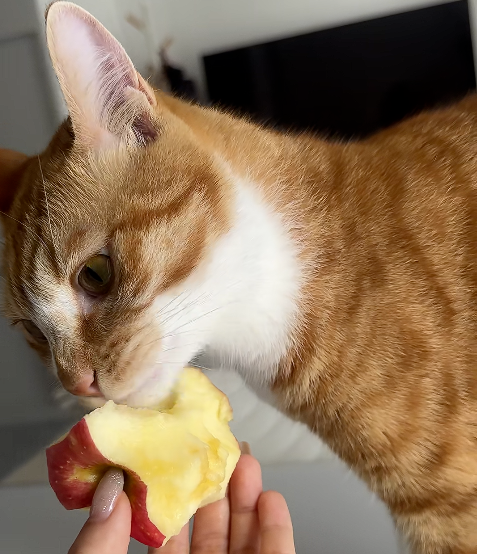
A small piece of apple can be offered occasionally, but always remove the core and seeds first. Wash the apple and cut the flesh into a very small piece before giving it to your cat.
Banana
A tiny slice of banana is generally fine for most healthy cats. However, bananas are relatively high in carbohydrates, and too much can cause digestive upset.
Watermelon and Cantaloupe
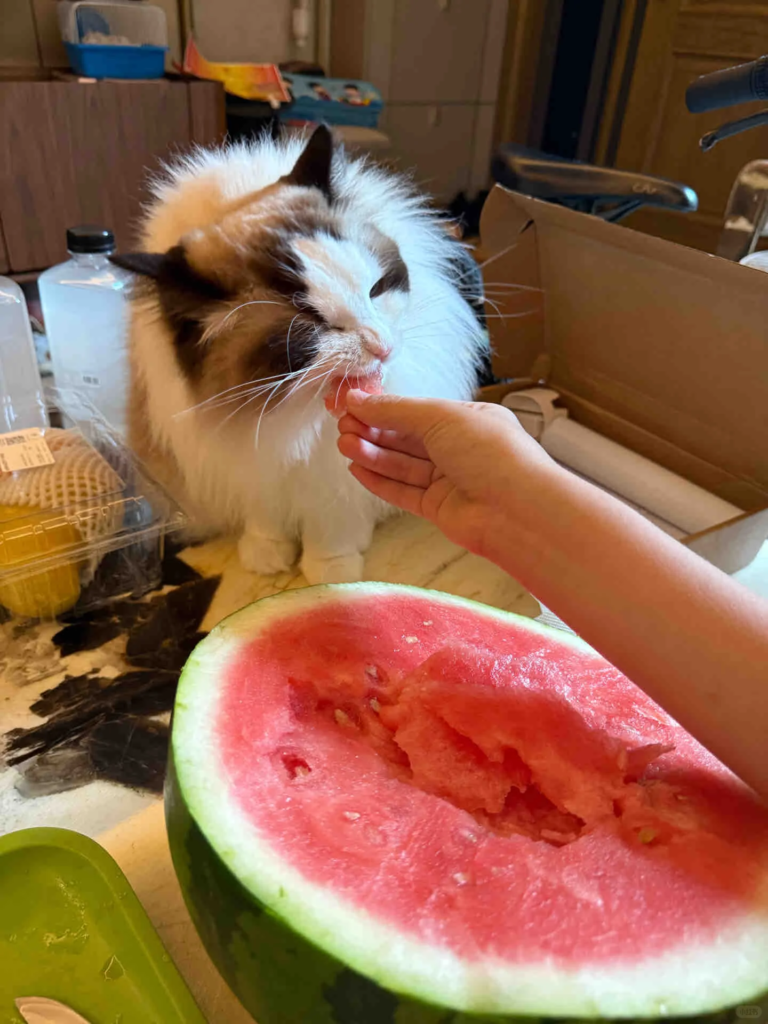
A small piece of seedless watermelon or cantaloupe can be offered as an occasional treat. Remove the rind and all seeds before serving.
Strawberries and Blueberries
A small, washed berry can be offered to a cat that enjoys them. Cut larger berries into smaller pieces to make them easier to eat.
Pineapple
Fresh pineapple can be offered in a very small amount after removing the tough skin and core. Avoid canned pineapple packed in syrup or products with added sugar.
The important thing to remember is that your cat isn’t missing anything if they never eat fruit. A properly formulated cat food already provides the nutrients they need.
Vegetables Cats Can Eat in Small Amounts
Vegetables are also optional. Some cats enjoy them, while others will take one sniff and walk away.
If your cat is interested, a few plain vegetables can be offered occasionally.
Carrots
A small piece of soft-cooked carrot can be easier for cats to eat than a hard raw piece. If you offer raw carrot, grate it finely rather than giving your cat a large, hard chunk.
Green Beans
Plain, cooked green beans can be offered in small amounts. Skip anything prepared with salt, butter, garlic, onion, or other seasonings.
Plain Pumpkin
Plain cooked pumpkin or plain canned pumpkin can be offered in a small amount. Make sure you use 100% plain pumpkin, not pumpkin pie filling, which may contain added sugar and spices.
Cucumber
Some cats tolerate a thin slice of peeled cucumber. It should be plain and offered only in a small amount.
Broccoli
A small piece of plain, cooked broccoli can be okay for some cats. If it causes digestive upset or your cat isn’t interested, there is no reason to keep offering it.
Fruits and Vegetables to Keep Away From Cats
Knowing what not to feed your cat is just as important as knowing what they can eat.
Some foods can be harmful or potentially toxic, even in relatively small amounts.
Onions, Garlic, Chives, Leeks, and Shallots
Keep cats away from onions, garlic, chives, leeks, shallots, and other members of the allium family.
These foods can damage red blood cells and may lead to anemia. Cats are particularly sensitive to alliums, and concentrated forms such as onion powder and garlic powder can be especially problematic.
That means you should also be careful with seasoned leftovers, sauces, soups, and other foods that may contain onion or garlic as an ingredient.
Grapes and Raisins
Do not intentionally feed grapes or raisins to your cat.
Grapes and raisins have been associated with kidney problems in pets, and there is no reliably established safe amount. If your cat eats grapes or raisins, contact your veterinarian or an animal poison service for advice rather than waiting to see whether symptoms develop.
Chocolate and Caffeine
Chocolate, coffee, tea, energy drinks, caffeine supplements, and other sources of caffeine should never be given to cats.
Chocolate is particularly concerning because it contains methylxanthines, including theobromine and caffeine. Depending on the amount consumed, these substances can cause vomiting, restlessness, abnormal heart rhythms, tremors, seizures, and other serious problems.
Dark chocolate and cocoa powder are especially concentrated sources.
Alcohol and Raw Yeast Dough
Alcohol is dangerous for cats and should never be offered.
Raw yeast dough is also a concern because the dough can continue to expand in the stomach while the yeast produces alcohol. Keep rising dough well out of your cat’s reach.
Xylitol
Xylitol is a sugar substitute found in some sugar-free products, including certain candies, gum, baked goods, and other products.
Because ingredient lists can vary, don’t assume that a human food is safe simply because it is labeled “sugar-free.” If your cat gets into a product containing xylitol or another potentially harmful ingredient, contact your veterinarian for advice.
Citrus Peels and Plant Parts
The essential oils and other compounds found in citrus peels and some other parts of the plant can irritate cats.
A tiny piece of orange flesh is not the same as eating citrus peel or concentrated citrus oil, but there is little nutritional reason to give your cat citrus in the first place. It’s generally easier to choose a safer treat.
Wild or Unidentified Mushrooms
Never let your cat eat a wild mushroom or any mushroom you cannot identify with certainty.
Some mushroom species can be highly toxic, and you should not rely on appearance alone to determine whether a mushroom is safe.
What About Foods That Are More Complicated?
You’ll find plenty of conflicting information online about certain human foods. Some are described as completely safe in one place and dangerous in another.
The reality can be more nuanced.
Avocado
Avocado is not considered one of the classic highly toxic foods for cats, but that doesn’t make it a particularly useful treat. Its high fat content can cause digestive upset in some cats, and the skin, pit, and other parts of the plant raise additional concerns.
There is simply no nutritional reason to give your cat avocado, so it is easier to choose a cat-appropriate treat instead.
Potatoes and Tomatoes
Raw, green, or sprouted potatoes can contain higher levels of compounds that may be harmful to cats. Avoid feeding these to your cat, and never give your cat the leaves or stems of tomato plants.
Again, when there is no nutritional benefit to taking the risk, there is little reason to experiment with questionable foods.
What About Milk and Other Dairy Products?
Many adult cats have difficulty digesting lactose.
That means milk, cream, and some other dairy products can cause diarrhea, gas, or stomach upset. Your cat may happily drink milk when given the chance, but enjoying something doesn’t necessarily mean it’s good for them.
If you want to give your cat a treat, a small piece of an appropriate cat treat is generally a better choice than a bowl of milk.
What Should You Do If Your Cat Eats Something Unsafe?
If your cat eats a food that may be toxic, don’t wait for symptoms before getting advice.
Contact your veterinarian or an animal poison control service and tell them what your cat ate, approximately how much, and when it happened. Keep the product packaging or ingredient list if possible.
In the United States, you can also contact the ASPCA Animal Poison Control Center at (888) 426-4435.
Do not try to make your cat vomit unless a veterinarian or veterinary poison specialist specifically tells you to do so. Some methods that are safe for people or dogs can be dangerous for cats.
The Bottom Line
So, can cats eat fruits and vegetables?
Yes, some fruits and vegetables can be offered in tiny amounts as occasional treats—but cats don’t need them.
Your cat’s everyday nutrition should come from a complete and balanced cat food formulated for their life stage. If you want to share a little of your food, keep it plain, keep the portion small, and introduce only one new food at a time.
And if your cat turns up their nose at your carefully prepared piece of watermelon?
Don’t worry. Your cat isn’t missing out. They’re just being a cat.